




The headless CMS is often presented as a natural evolution: the content is managed in a tool, exposed via an API, and then rendered in a modern application. This separation can accelerate omnichannel experiences and allow each layer to evolve. However, it does not remove any functionality. It shifts the preview, routing, caching, forms, search, redirects, and part of the SEO to the product team.
The correct reasoning is therefore not 'traditional or modern.' It consists of comparing the value of decoupling to the cost of an additional distribution platform.
Coupled, decoupled, headless: three different realities
In a coupled CMS, editing, templates, and rendering exist within the same product. The contributor previews the page, and publishing immediately makes the content available.
In a decoupled CMS, the CMS can continue to render part of the site while some experiences consume an API. This gradual transition preserves native functions and limits risk.
In a pure headless, the CMS has no rendering responsibility. One or more applications build the experience. This freedom is maximal, but the delivery platform becomes a product to maintain.
The use cases that truly justify headless
Several channels reuse the same content
A catalog, a knowledge base, or branded content must feed a website, an application, screens, and partners. The structured model and the API prevent duplication.
The experience requires a very specific frontend
Configurator, rich visualization, real-time interface or offline application can exceed the capabilities of a classic theme engine. Headless allows choosing the appropriate interface technologies.
The teams have independent cycles
A content team, a web team, and a mobile team can deliver at different paces, provided that contracts and compatibility are governed.
The CMS must be replaceable
An internal access layer can reduce dependence on a provider when the lifespan of the experience exceeds that of the CMS. This portability is only real if the templates and media are exportable.
Content becomes a capability of the information system
Internal services, partners, or agents can use a common editorial repository. The CMS is then a structured source, not just a page tool.

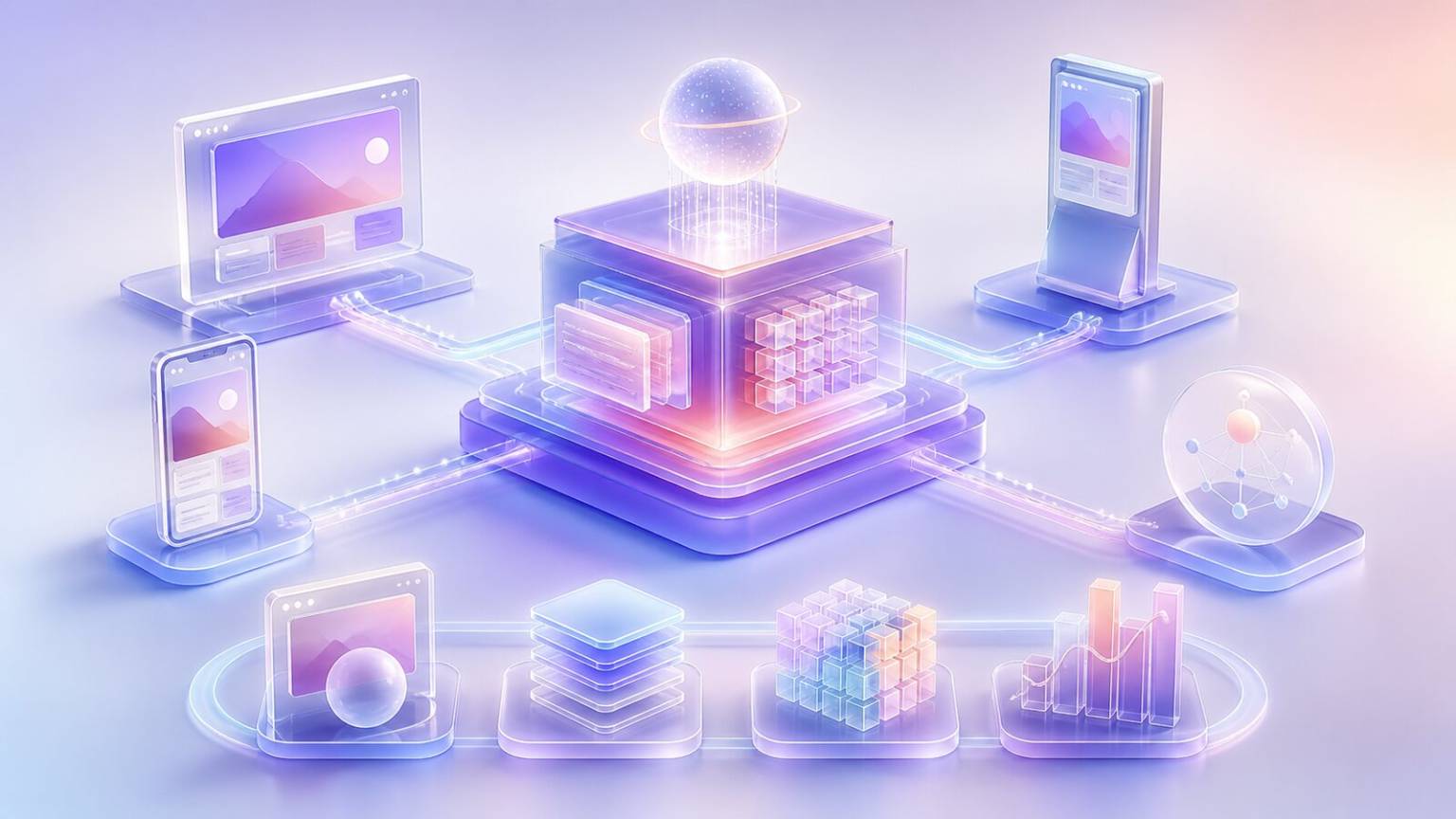
Comparison of the functions built into a coupled CMS and those to be rebuilt in a headless architecture.
Situations where a coupled CMS remains superior
A unique site, highly editorial, with a limited team and a need for quick online publication often benefits from a well-structured coupled CMS. Previewing, forms, menu management, and redirects are available without an additional platform.
Headless can also be excessive when the content depends heavily on the layout. If each block only makes sense in a specific template, the API does not create true reuse.
Finally, an organization that does not have the skills to maintain a frontend, server rendering, a deployment chain, and separate observability risks becoming more dependent on its provider.
The number one hidden cost: previewing
The contributor must see the result before publication, including drafts, variants, customizations, and scheduled content. The CMS and the frontend must share an identity, a preview mechanism, routing, and a caching strategy separate from the public.
An incomplete preview degrades editorial quality and pushes teams to request test publications. It should be considered a first-release requirement.
Routing, menus and redirects
In a coupled CMS, creating a page can generate a URL and add it to navigation. In headless, it is necessary to decide where the routes reside, how slugs are unique, who manages the menus, and how an old URL is redirected.
Contents referenced by identifier and public URLs must remain separate. Changing a title must not break the links. The publishing chain can trigger targeted invalidation of the affected pages.
SEO and JavaScript rendering
A headless site can be perfectly indexed if the useful HTML is rendered quickly, the links are crawlable, and the metadata is consistent. The problem does not come from JavaScript itself, but from content rendered late, silent errors, unstable routes, or divergent structured data.
Server-side or static rendering, the canonical, sitemaps, redirects, pagination, and social tags must be tested as features. The CMS can provide the fields; the frontend is responsible for their correct application.
Hidden and freshness
Decoupling adds several caches: CDN, rendering, API, image, and sometimes browser. A publication must invalidate only what has changed, without clearing the entire site or leaving outdated content.
The system must know which pages use a piece of content, manage dependencies, and provide a republishing mechanism. An acceptable freshness strategy can simplify the architecture: not all updates require propagation to the second.
Forms and interactions
A coupled CMS often provides forms, anti-spam, storage, notifications, and administration. In headless, these capabilities must be built or integrated. Consent, server validation, files, abuse protection, recovery, and export must be handled.
Form components must remain accessible and consistent across channels. Editorial content must not be able to inject an unauthorized action.
Search
Research may require external indexing combining multiple sources. The engine must respect publication statuses, languages, permissions, and deletions. A publication is only complete when the index is coherent or the delay is visible.
Headless search offers a rich experience, but it creates a data pipeline to supervise.
Images and media
The CMS can retain the originals and metadata, while a service transforms the formats and dimensions. URLs must be stable, signed when necessary, and cache-compatible.
Alternative texts, captions, rights, and focal points must travel with the media. An image is not just a file independent of its context.
Security
Public APIs expose a new surface. Admin tokens should never be present in the frontend. Private or previewed content requires server-side controls.
It is necessary to limit requests, validate parameters, control exposed fields, and log sensitive accesses. Publishing webhooks are authenticated and deduplicated.
Reliability and degraded mode
A page may depend on the CMS, search, commerce, and personalization. The unavailability of a secondary service should not make the entire experience unusable. The frontend must provide cached content, timeouts, fallback values, and clear messages.
Observability follows the complete journey: render time, API errors, publishing failures, invalidations, and indexing delay.
Organization and responsibility
Decoupling allows autonomy only if responsibilities are clear. Who guarantees the compatibility of the model? Who is responsible when a publication does not appear? Who validates a contract modification?
A component catalog, a shared content schema, contract tests, and preview environments reduce coordination. Without them, every editorial change becomes a cross-functional project.
Calculate the total cost
The budget must include:
- CMS and possible licenses;
- frontend and design system;
- rendering, CDN, and hosting;
- preview;
- forms and search;
- observability;
- end-to-end testing;
- maintenance of multiple dependencies;
- contributor support;
- model and data migrations.
Headless can reduce the delay of a new channel, but increase that of a simple page change if the editorial tools are insufficient.
A gradual approach
An organization can start by structuring content, exposing some APIs, and decoupling a process that derives clear value from it. The rest of the site keeps its native rendering. The benefits, costs, and usage are measured before extending the model.
This strategy avoids a complete rewrite and builds preview, caching, and exploitation capabilities on a controlled scope.
Choose an architecture, not a label
Headless is relevant when it addresses a lasting need for channels, experience, or organization. It is useless when its main justification is the novelty of the frontend.
Partitech can compare coupled, decoupled, headless, and hybrid scenarios, then design the trajectory, contracts, preview, and operation. The goal is to free experiences without making publishing more fragile.
Let's talk about your project
Align a headless or hybrid architecture with Partitech. Contact Partitech.